

Tide & Stream Aquatics
Rainbow Shark (Epalzeorhynchos frenatum)
Rainbow Shark (Epalzeorhynchos frenatum)
Couldn't load pickup availability
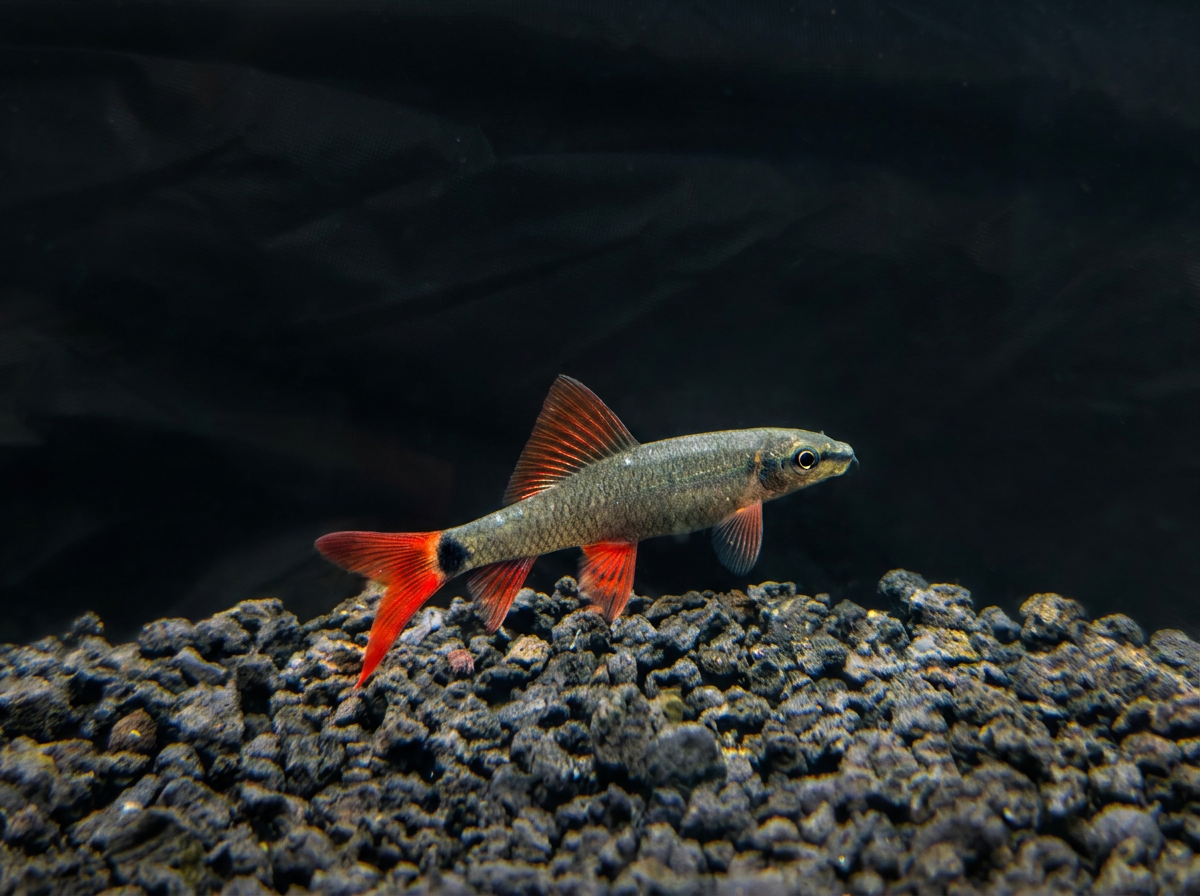
Rainbow Sharks (Epalzeorhynchos frenatum) are sleek dark-bodied cyprinids with vivid red fins—aquarium favorites that patrol the lower third of the tank like tiny freshwater sharks.
Personality is half the appeal: they claim caves, chase rivals of similar shape, and stay busy grazing biofilms and leftover food.
Give one adult plenty of length, a few hiding spots, and energetic midwater tank mates, and you will get a striking centerpiece without needing a monster cichlid tank.
Quick care
- Adult size: About 5–6 inches
- Temperament: Semi-aggressive and territorial toward similar fish
- Minimum tank size: 55 gallons minimum for one
- Diet: Omnivore wafers, pellets, veggies, frozen invertebrates
- Water: 74–81°F; pH 6.5–7.5; clean, well-filtered water
- Ideal tank mates: Barbs, rainbowfish, larger tetras, peaceful gouramis; not with other rainbow sharks in small tanks
Frequently asked questions
What tank size do Rainbow Shark (Epalzeorhynchos frenatum) need?
Long-term, think 55 gallons or larger with length for one adult. Juveniles sold in stores quickly outgrow desktop tanks. Strong filtration matches their active metabolism.
Can Rainbow Shark (Epalzeorhynchos frenatum) live together?
Usually poorly—conspecific aggression is common in home aquariums. One specimen is the standard recommendation. Only very large, carefully aquascaped systems ever succeed with multiples.
How territorial is a Rainbow Shark (Epalzeorhynchos frenatum)?
Notably territorial toward similarly shaped bottom-dwellers and other sharks. Mid-water schooling fish often fare better. Provide caves and sight-line breaks.
What tank mates work with Rainbow Shark (Epalzeorhynchos frenatum)?
Active barbs, rainbowfish, larger tetras, and robust mid-water species in spacious tanks. Avoid other Epalzeorhynchos, red-tail sharks, and shy nanos. Watch introductions carefully.
What do Rainbow Shark (Epalzeorhynchos frenatum) eat?
Sinking omnivore foods, blanched vegetables, and frozen treats. They browse algae but are not a substitute for tank maintenance. Feed so bottom-dwellers actually get a share.
Are Rainbow Shark (Epalzeorhynchos frenatum) good for planted tanks?
They usually ignore tough plants but may uproot soft ones while foraging. Focus on heavy planting around open swimming lanes. Secure décor they won’t constantly rearrange into warfare zones.
Share