

Tide & Stream Aquatics
Copeland's Tetra
Copeland's Tetra
Couldn't load pickup availability
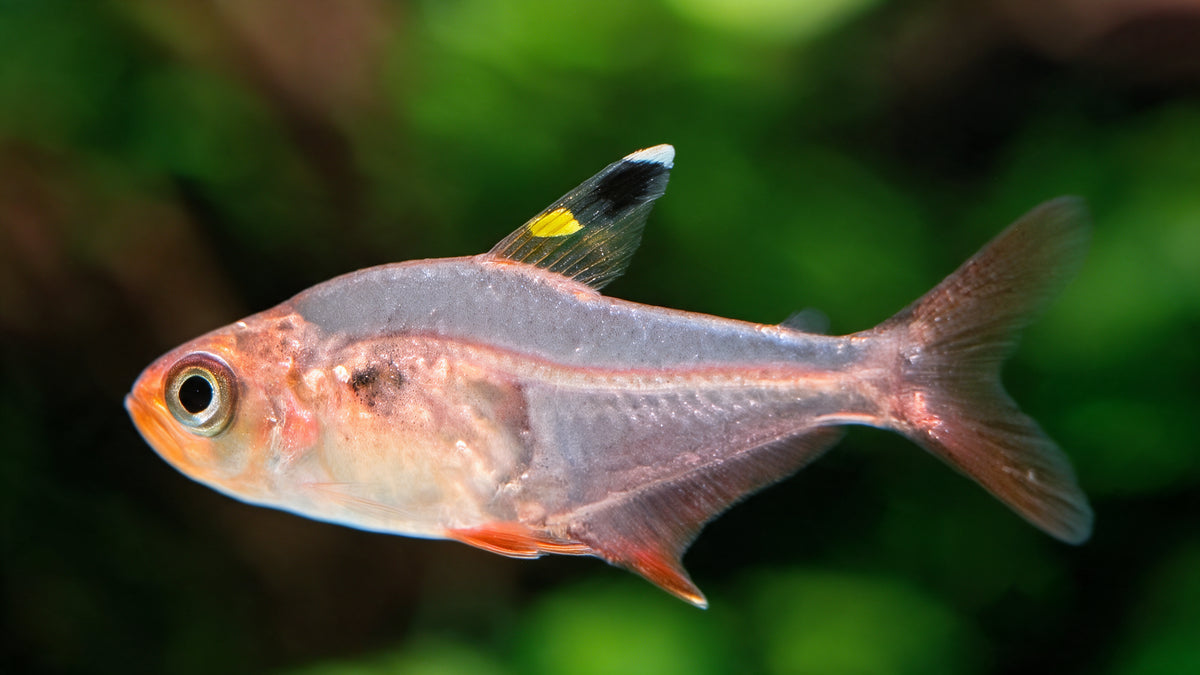
Copeland's Tetra (Hyphessobrycon copelandi) is a small, peaceful South American schooling tetra with a silvery body, red-tinged fins and a lively, active personality.
We offer the Copeland's Tetra in the size options shown. Photos are examples, and you will receive a healthy, similar fish. Sizes marked Unsexed are sold by size only, so you can't choose males or females.
Quick care
- Adult size: About 1.5–2 inches
- Temperament: Peaceful community schooler
- Minimum tank size: a 20-gallon tank or larger for a group of at least six
- Diet: Omnivore: fine flakes, micro pellets and small frozen or live foods like daphnia and baby brine shrimp
- Water: 72–80°F; pH 5.5–7.5; soft to moderately hard water
- Ideal tank mates: Other small peaceful fish such as rasboras, small corydoras and dwarf cichlids
Frequently asked questions
What tank size does a Copeland's Tetra (Hyphessobrycon copelandi) need?
Plan on a 20-gallon tank or larger for a group of at least six. Keep a school of six or more; they show better color and act bolder in numbers.
Can Copeland's Tetra (Hyphessobrycon copelandi) live with other fish?
Other small peaceful fish such as rasboras, small corydoras and dwarf cichlids. Peaceful community schooler.
What should I feed a Copeland's Tetra (Hyphessobrycon copelandi)?
Omnivore: fine flakes, micro pellets and small frozen or live foods like daphnia and baby brine shrimp. Feed small portions once or twice a day and remove uneaten food.
How big do Copeland's Tetra (Hyphessobrycon copelandi) get, and how long do they live?
About 1.5–2 inches. Around 4–5 years.
What water conditions does a Copeland's Tetra (Hyphessobrycon copelandi) like?
72–80°F; pH 5.5–7.5; soft to moderately hard water. Keep the water clean and stable, cycle the tank before adding fish, and acclimate slowly.
Are Copeland's Tetra (Hyphessobrycon copelandi)s fin nippers?
They are generally gentle, but like many tetras they can nip if kept in too small a group. Keep them in a proper school and avoid pairing them with slow, long-finned fish.
Share